Why "how long" has no single answer
Ask how long an automatic coop door battery lasts and you will get confident numbers — two weeks, six months, a full season. Almost all of them are meaningless, because battery life is not a property of a battery. It is a division problem: capacity divided by what the door actually spends, and the spending depends on how often the door moves, how chatty its radio is, and what the weather does to the solar panel. A door that opens twice a day for a flock of four spends almost nothing; a door that radios status every minute, drives a display, and closes on a stubborn feather every other dusk spends a lot.
That is why every serious battery claim needs a duty cycle attached: how many open-close cycles per day, with which radio habits, over how many measured days. Anything less is a guess dressed up as a spec. Here is ours, with the numbers we can actually stand behind.
What our door's battery actually did — straight from the log
We ran two verification passes on the outdoor unit and published the full log on the product page. Both were real, continuous runs — not extrapolations from a spec sheet.
| Run | Conditions | Duration | Result |
|---|---|---|---|
| Solar recharge | Light rain and clouds, solar panel only | 4 days (Aug 1–5) | 0% to 100% |
| Battery only | Solar disconnected, door cycling daily | 18 days (Aug 6–23) | 100% to 0% |
| Bench run | Battery alone, door cycling daily | 15+ days | Zero failures |
Three things in that table are worth pausing on. First, the recharge: four days of light rain and overcast — not a single sunny day — took an empty battery to full, because a solar panel does not need blue sky, only daylight. Second, the drain: 18 days from full to empty with the door opening and closing every single day works out to roughly five percent a day on average, computed from the published log. Third, the two runs agree — a 15+ day bench observation and an 18-day logged outdoor run are the same answer measured twice, which is what a real number looks like.
Where the charge actually goes
A pop door's motor is nearly a rounding error. The door moves twice a day; each move averages 0.25 seconds, and even our slowest recorded move took 5.5 seconds. Add it up and the motor runs for a handful of seconds per day. Across 204 measured cycles — 204 opens and closes in one continuous endurance run — the door did not fail once.
The quiet, constant consumer is the electronics: the controller, the radio, the self-checks. Every two hours the door verifies its motor and its link and reports drift, and each status burst spends a little charge. This is where design decides everything. Most smart doors bolt the Wi-Fi radio, the screen, and the controller onto the door itself, so those hungry parts drink the same small battery the motor uses. We split the job instead: the outdoor unit is just a lock and a radio receiver using short, low-power bursts on a 915 MHz link, while the gateway that runs the control logic, the display, and the Wi-Fi sits indoors on wall power. The battery out at the coop barely has anything to feed — which is the whole reason it lasts weeks instead of days. The same split is why the door keeps working without Wi-Fi at the coop.
Cold deserves one honest sentence: batteries deliver less in a hard freeze, so expect somewhat shorter runtime in deep cold. The rating on this door spans −25 °C to 60 °C, which covers the winters most backyard flocks see — the fuller winter story, including ice, is in our winter survival guide.
When solar makes it "unlimited" — and when it doesn't
In normal sun, the panel refills the battery faster than the door drains it, which is what "unlimited runtime in theory" actually means: not that the physics changed, but that the income exceeds the spending. The log makes the boundary honest. Rain and clouds were enough to recharge — daylight, not sunshine, is the fuel. But stretch a run of short grey winter days and the spending wins for a while: the reserve drifts down a little every day until the sun comes back or you top it up. Which option fits your setup — panel, battery, or a cord to the house — is its own decision, covered in our comparison of the three power approaches.
The engineering answer to grey stretches is not a bigger panel. It is telling you early.
The number that matters more than capacity
A big battery with a silent failure mode is worse than a modest battery with a loud warning, because the failure you never saw coming is the one that leaves a flock locked out at dawn — or worse, a coop open all night. So the low-battery behavior deserves as much attention as the mAh figure.
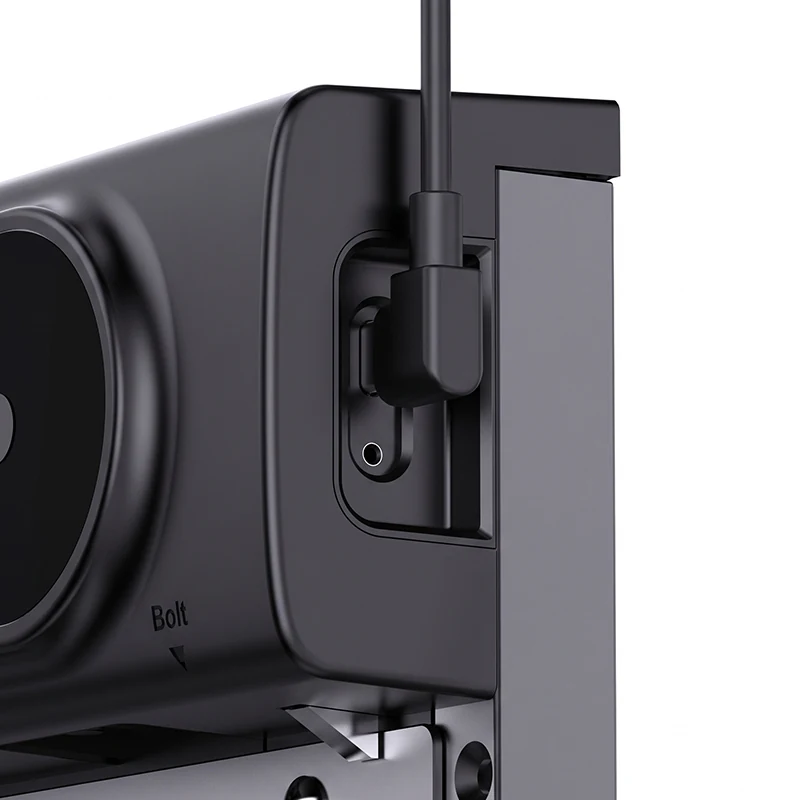
Ours warns at 30%, deliberately early — the alert arrives with days of runtime still in the pack, not minutes. From there, the fix is undramatic: bring the door unit indoors and charge it over Type-C, the same way you charge a phone, then put it back. And because the door self-checks every two hours and keeps the last 50 door events on the unit, a declining battery shows up as a notification with a log behind it — never as a silent stop you discover at the pop door. That is the design philosophy in one line: no single number, however impressive, replaces knowing what the door is doing.
How to read any brand's battery claim
The checklist we would use on any coop door, including our own:
- Demand the duty cycle. How many open-close cycles per day is the claim based on? Bench or field? Without this, the number is decoration.
- Look for a published log, not a rounded figure — day-by-day battery levels, weather included.
- Check the low-battery path: a threshold with real margin, an alert that reaches your phone, and a port you can charge from yourself.
- Check the temperature rating so winter is a spec, not a surprise.
Our full specifications, both verification logs, and the electrical details behind this article are on the Smart Coop Door page.
FAQ
How often do you actually have to charge an automatic coop door?
With a solar panel in normal sun, possibly never — the panel refills faster than the door drains. On battery alone, expect weeks rather than days: our door ran 15+ days in bench testing and 18 days in a logged outdoor run with daily cycling, both without any solar help.
Does cold shorten the battery life of a coop door?
Expect somewhat less runtime in deep cold — that is true of every battery. What to check instead is the rating: ours is rated from −25 °C to 60 °C, which covers most backyard winters. The real winter risks are ice on the door edge and grey-week power drift, not the cold itself.
What happens when the battery gets low?
The door sends a low-battery alert at 30% — raised with days of runtime still left, not minutes. From there you can top the unit up indoors over Type-C, like charging a phone. If you do nothing, the alerts keep coming and the event log records everything that happened.
Is solar alone enough to run a coop door forever?
In normal sun, yes — the panel can outpace the door's drain, which is what 'unlimited runtime in theory' means. Long overcast stretches pull the reserve down faster than the panel refills it, so the warning margin and a backup charging port matter more than panel size.