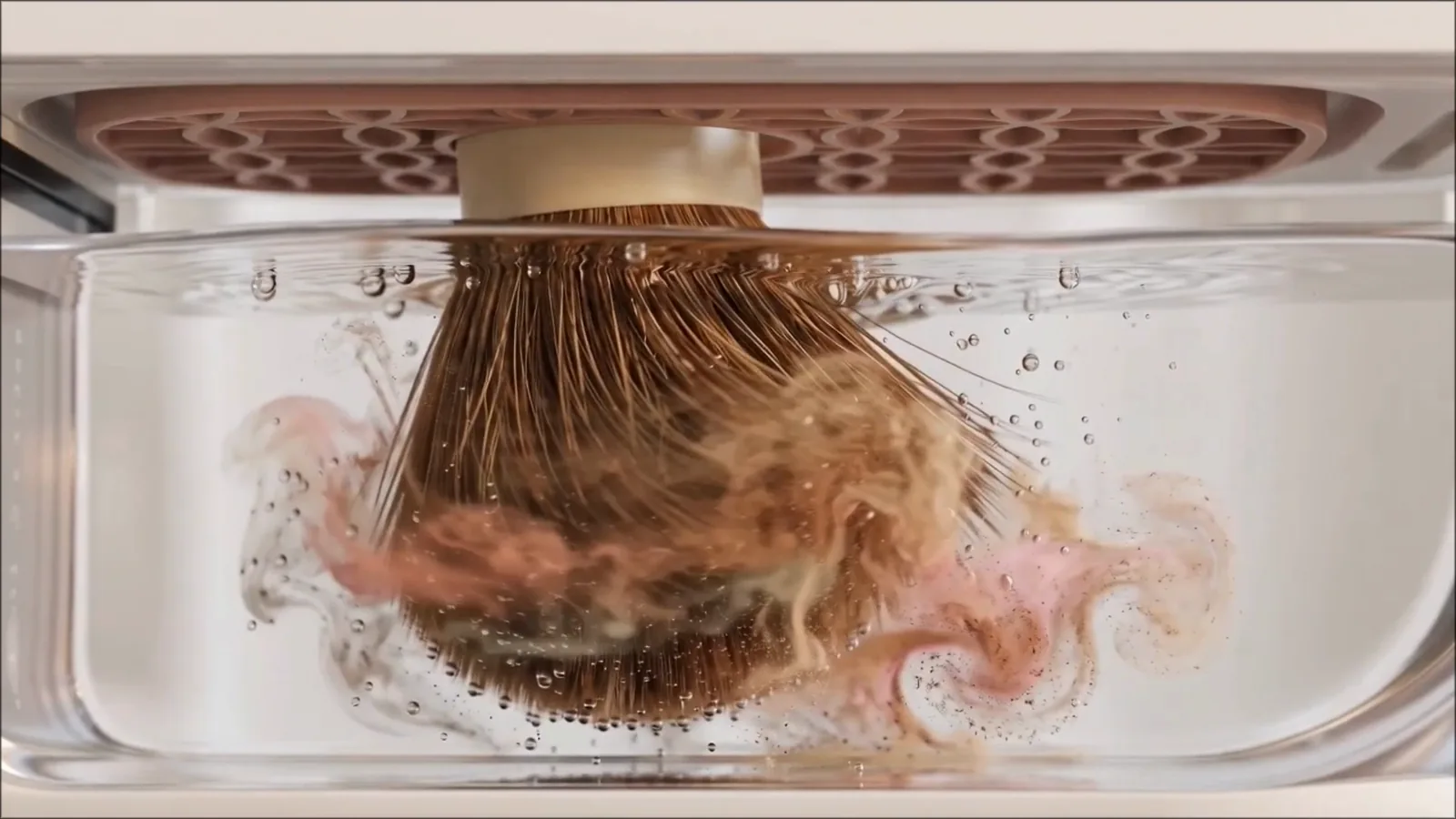
A makeup brush almost never smells when it is new. The odor arrives gradually — a sour note the next time you pick it up, or a musty smell that has you sniffing the bristles before a foundation application. That smell is not cosmetic wear. It is a direct report from inside the brush: something in there is growing, and it is growing on a food source you keep supplying.
What the smell actually is
Brush odor has three ingredients, and all three sit in the same place:
- Old makeup. Every use pushes foundation, concealer, or cream blush a little deeper into the bristle packing. It accumulates fastest at the root — the dense base where the bristles meet the ferrule — where it hardens into a layer no casual rinse touches.
- Skin oil and dead skin cells. Transferred from your face with every application, mixed into the residue.
- Moisture. From washing, from humid bathrooms, from a brush capped or bagged before it fully dried.
Bacteria feed on that combination. Their byproducts are what you smell: a sour, rancid note from broken-down oils, or a damp, musty note from growth in a brush that stays wet too long. The residue layer at the root is the pantry; the smell is the exhaust. This is also why a brush can look clean at the tips and still smell — the part you can see is not the part that smells.
Match the smell to the cause
| What it smells like | What is usually going on | What actually fixes it |
|---|---|---|
| Sour or rancid | Old oils and cream makeup being broken down by bacteria at the bristle root | A deep clean that agitates the root, not just the tips |
| Musty or damp | The brush was stored before it dried, or lives in a closed bag or drawer | Full air-drying in an open position, then dry storage |
| Like old makeup | Layered surface residue from months between washes | A regular wash schedule, so residue never stacks up |
Two of those three rows point at the same underlying mistake: treating the brush as clean when only its surface is clean.
Why washing the tips does not remove the smell
The intuitive fix — swirl the brush in soapy water until the water runs clearer — cleans exactly the part of the brush that was least responsible for the odor. The bristle tips pick up the suds and release surface pigment. The root stays still. Dense bristle packing blocks water from flowing through the base, and a gentle swirl provides no force that could push residue out of it.
So the wash ends, the brush looks fine, the smell returns within a few uses — because nothing removed the food source. The residue at the root keeps feeding bacteria in the warm, slightly damp environment of a brush that gets used on a face every day. If the wash cannot reach the root, the smell is not being fixed; it is being paused.
The deep-clean routine that removes it
1. Wet the brush with lukewarm water, bristles pointing down so water does not pool in the ferrule — the metal collar where glue holds the bristles. 2. Work cleaner deep into the base. A gentle soap is fine; the variable that matters is agitation at the root. Squeeze and roll the bristles between your fingers so the base physically moves, or use a tool that drives motion into the bristle root rather than swirling water around the tips. 3. Rinse until the water runs fully clear, pressing from the ferrule toward the tips. 4. Squeeze out the water with a clean towel, reshaping the bristles into their natural fan. 5. Dry flat with the head hanging off a counter edge, so air moves around the whole head and water drains away from the ferrule. Never upright in a cup — that is how water, glue, and smell problems compound. 6. Store it dry and ventilated. A fully dry brush in an open holder or a breathable pouch stays neutral. A damp brush zipped into a makeup bag restarts the musty cycle within days, no matter how well you washed it.
Step 2 is the one people skip, and it is the one that decides whether the smell comes back. Steps 5 and 6 decide whether it comes back even after a correct wash — drying position and time deserve their own attention.
Keeping it from coming back
| Habit | Why it works |
|---|---|
| Rinse cream-product brushes every two to three uses | Residue never hardens into a root layer |
| Deep clean weekly | Removes buildup the quick rinse missed |
| Dry fully before any storage | No trapped moisture means no musty regrowth |
| Loose, ventilated storage | Air circulation keeps the bristle base dry between uses |
The through-line is schedule, not intensity. A monthly aggressive scrub loses to a weekly light one, because the bacteria population rebuilds on the days between washes — the case for weekly cleaning is the same case as the case against odor.
Where a machine helps
The honest framing: the smell lives at the root, and the root is precisely where hand-washing is weakest. The brush cleaner we are developing at LARKBIRD attacks that specific point — a percussive mechanism drives high-frequency impact straight down into the bristle base, shattering hardened foundation, concealer, and cream residue at the source instead of moving water around the surface. Drop the brush in, press start, and the auto-stop ends the cycle on its own.
It does not change the other two variables. Drying is still evaporation, and storage is still your habit — no machine fixes a brush that gets bagged while damp. But removing the root residue removes the pantry, and that is the step that decides whether the sour note returns.
The bottom line
A brush smells because residue, skin oil, and moisture at the bristle root feed bacteria — not because the brush is old. Clean the root with real agitation, dry the brush fully in an open position, and store it ventilated, and the odor has nothing left to feed on. Masking sprays and tip-only swirls reset the clock; they do not stop it.
If the root-cleaning half of that routine is the part you would rather not do by hand every week, see the LARKBIRD Brush Cleaner Pro — more brush-care guides are collected here.
FAQ
Is it bad to use a makeup brush that smells?
The odor is a byproduct of bacteria growing in old residue. Every application presses that mixture back onto your skin, which can contribute to irritation and skin problems. Set the brush aside until it has been deep-cleaned and fully dried.
Why does my brush still smell after I wash it?
Because the wash did not reach the root. Swirling the tips in soapy water leaves the residue packed at the bristle base untouched, and that residue is the food source the odor comes from. The brush also has to dry completely — one capped or bagged while damp goes musty again within days.
Can I cover the smell with perfume or sanitizer spray?
No. Fragrance masks the odor for a day and does nothing about the residue feeding it. Alcohol-heavy sprays can also dry out natural bristles and stress the glue inside the ferrule. Remove the food source instead of painting over it.
How often should brushes be washed so they never start smelling?
Brushes used with liquid or cream products need a rinse every two to three uses and a deeper clean weekly. Powder-only brushes can go longer between washes. The schedule you actually keep matters more than how aggressive any single wash is.