Ordering gloves online means betting on a size chart, and with ordinary gloves a wrong bet is a mild annoyance: a little slack here, a quick exchange there. With heated gloves the stakes are different, and most product pages never explain why. Fit isn't just about comfort in a heated glove — it's part of how the product produces warmth at all. Get it wrong in either direction and you quietly lose the thing you paid for.
Why fit matters more when gloves heat
An ordinary glove works by trapping whatever warmth your hands produce. Trapped air is part of that — which is why the folklore says a slightly loose glove is fine, even cozy. As we covered in why gloves don't make heat, insulation only slows heat down; it never adds any.
A heated liner changes the mechanism. Heating lines run across the back of the hand and up both sides of every finger, and that warmth reaches your skin by contact. The heat is made at the fabric; your job is to be on the other side of that fabric with as little air in between as possible.
That flips the usual sizing intuition:
- A loose heated liner is a heated glove warming air. Every gap between the liner and your skin is a layer of still air between the heating lines and the fingers they're supposed to warm. The elements run, the battery drains, and the heat mostly never arrives.
- A tight liner fights the other half of the product. The reason ours is an ultra-thin knit rather than a padded glove is that it keeps your fingers usable — typing, texting, handling small tasks all day. Cinch the fit past snug and you're back to gloves you have to pull off to do anything, which restarts the cold-fingers clock.
So the target is specific: snug and close to the skin, with full finger movement. Not compression. The double-brushed knit is designed to sit close and stay soft through daily wear — it does the fitting work if you give it the right size.
The two measurements that decide your size
You don't need a fitting session — two numbers cover it. Both take under a minute with a soft tape measure (or a string and a ruler).
| Measurement | How to take it | What it decides |
|---|---|---|
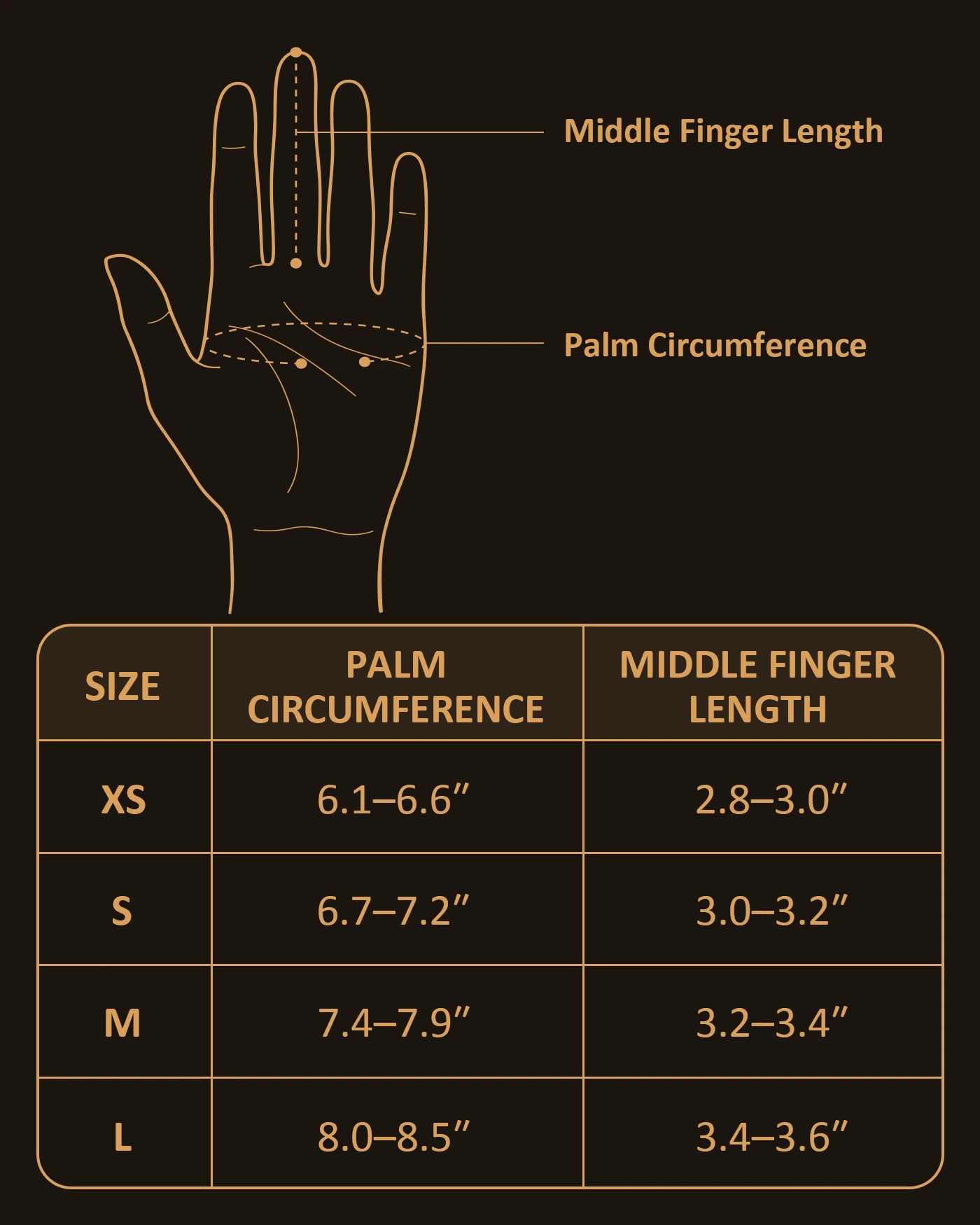
| Palm circumference | Wrap the tape around your flat palm at the knuckles — across the back of the hand, thumb out of the way, hand relaxed | The overall glove size: how the palm and the back of the hand sit against the heating lines |
| Middle-finger length | Measure from the tip of the middle finger down to the crease where the finger joins the palm | Finger length: whether the heating lines that run up both sides of every finger reach your actual fingertips |
Measure the hand you write with — it's usually the slightly larger one, and one size has to fit both hands. Take each measurement twice; if the two readings disagree, trust the larger one.
Our size guide maps both numbers to four sizes — XS, S, M, and L. The first run was sized around the community these gloves were designed for, where most wearers are women, which is one more reason to measure rather than assume your usual glove size carries over: women's sizing runs differently across brands, and heated gloves are one category where the chart is worth the sixty seconds.
Snug, not tight: what "right" feels like
Once the gloves are on, here's the honest checklist for judging the fit before you commit to a full day in them.
| Signal | What it means |
|---|---|
| Palm fabric lies flat — no loose folds when you make a fist | Contact is good; heat has a short path to your skin |
| Fingertips sit at the ends of the fingers, no empty tip | The per-finger heating lines reach where cold shows up first |
| You can type and text without thinking about the gloves | Dexterity is intact — the thin-liner trade is working |
| Knuckles ache or fingertips tingle when you flex | Too tight; heat won't fix circulation you've squeezed off |
| The back-of-hand battery pod sits flat under its strap | The pod rides the back of your hand — a correctly sized glove keeps it clear of your wrist so typing never means leaning on a battery |
That battery-pod check is easy to skip and worth doing: it's the part of the glove that meets your desk all day. Sized right, the strap holds the pod on the back of the hand where nothing presses on it. Sized wrong, no strap adjustment fixes a glove that's fighting your hand's shape.
Fitting around the way you'll actually wear them
Indoors — the desk, the classroom, the commute between them — the liner is the whole outfit, and the snug fit serves you directly: heat arrives fast (you should feel it within about ten seconds of switching on), the touchscreen fingertips on thumb and index mean a text gets answered without peeling anything off, and nothing bunches when you grab a mug or a pen.
Outdoors, the liner layers under a shell glove. The sizing rule stays the same — size the liner to your hand, not to the shell. It's tempting to size up "for layering," but an oversized liner puts air gaps between the heating lines and your skin exactly where it matters, and the shell has its own fit over your dressed hands. If you're planning this, it's covered in more depth in typing in heated gloves — the thin-liner build is what makes both jobs possible at once.
If your measurements land exactly between two sizes, lean snug for a heated liner — warmth depends on contact — as long as your fingers still move freely at the knuckles. And if the chart doesn't reach your size at all: the first run is XS through L, larger sizes may follow if there's demand, and telling us what you need is exactly what the launch-updates form is for.
One boundary, stated plainly: these are comfort products, not medical devices, and nothing here treats, relieves, or prevents any medical condition — for that, talk to your doctor.
Sixty seconds with a tape measure beats a return shipment every time. Measure the palm, measure the middle finger, and pick the size both numbers agree on — that's the fit the heating lines were designed around.
See the Heated Liner Gloves — sizes and measuring guide.
FAQ
How do I measure my hand for heated gloves?
Two numbers: palm circumference (tape around the flat palm at the knuckles, thumb out) and middle-finger length (tip of the middle finger to the crease where the finger meets the palm). Match both against the brand's size guide rather than guessing from your usual glove size.
Should heated gloves be tight or loose?
Snug — close to the skin, with no baggy material across the palm or fingers. Heat travels by contact, so air gaps between the heating lines and your skin waste warmth. But tight enough to pinch or resist finger movement is too tight; a liner still has to let you type.
What sizes do heated liner gloves come in?
Our first run covers four sizes — XS, S, M, and L — sized around the community these gloves were designed for, where most wearers are women. Measure your palm and middle finger and match the guide; larger sizes may follow if there's demand.
Do I need a bigger size to wear heated gloves under shell gloves?
No — size the liner to your hand, snug as it's meant to fit. The shell glove gets sized over your hands as they'll actually be dressed, which is the shell's sizing problem, not the liner's. An oversized liner under a shell just puts air gaps between the heating lines and your skin.
I'm between two sizes — which should I pick?
For a heated liner, the size your measurements actually match is the one to take; if you sit exactly between two, the snugger option is the safer pick for warmth, as long as your fingers can still move freely for typing and small tasks.