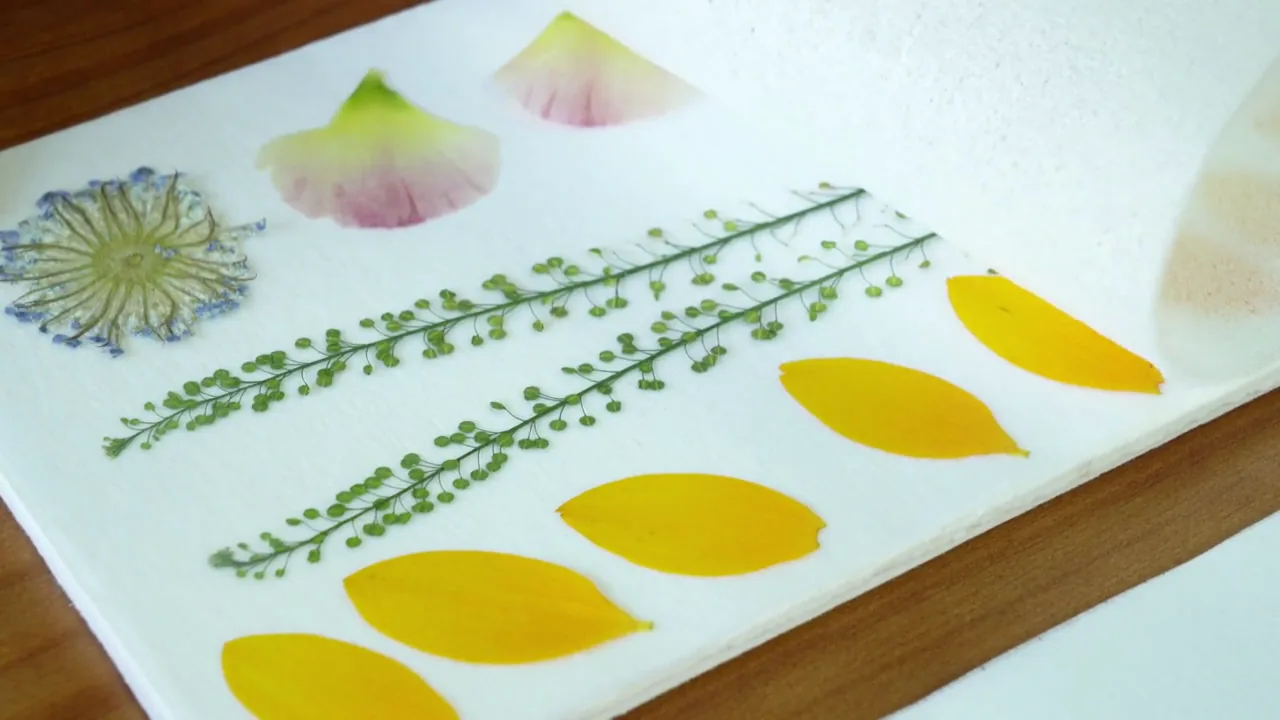
You can press almost any flower flat between two boards. Whether it comes out as a clean, colorful specimen or a brown smear is decided before the strap ever tightens — by the flower itself. Picking the right flower for the press, and preparing it the right way, is the difference between a keepsake and compost.
The good news: the list of flowers that press beautifully is long, and you already know most of them. The short version: anything flat and single-layered presses well. Thick, watery blooms need one small change. Almost nothing is off-limits with the right prep.
What makes a flower press well
A press dries a flower by holding it flat while the blotting boards pull the moisture out. So the flowers that press best share three traits:
- Thin petals. Thin tissue loses water quickly and evenly, so the color locks in instead of browning out.
- A naturally flat face. Flowers that already grow flat — pansies, daisies — need the press to change almost nothing about their shape.
- Moderate moisture. A crisp petal dries in days. A thick, watery one holds water for a week and starts breaking down before it ever gets dry.
None of this means thick flowers are off-limits. It means they press differently — as petals rather than whole heads.
The flowers that press whole
The ratchet flower press is built around flat, single-layer flowers, and these are the reliable performers:
| Flower | How to press it | Expected time |
|---|---|---|
| Pansies and violas | Whole, one layer | 3–6 days |
| Daisies | Whole, one layer | 3–6 days |
| Zinnias | Whole, one layer | 3–6 days |
| Cosmos | Whole, one layer | 3–6 days |
| Delphiniums | Whole, one layer | 3–6 days |
| Geraniums | Whole, on their own layer | the long end of 3–6 days |
| Most ferns and leaves | Whole | 1–3 days |
Two habits make this table work. First, one layer means one layer — no petals overlapping, no stacking a second flower on top of the first. Overlapped spots stay thick and damp, and damp spots are where browning starts. Second, keep flowers of similar thickness together on the same layer. A viola and a geranium dry at different speeds; pressed side by side, one is finished while the other is still wet. Separate layers for separate thicknesses, and the whole batch comes out done at the same time.
The timing, honestly
| What goes in | Time in the press |
|---|---|
| Leaves and ferns | 1–3 days |
| Flat, single-layer flowers | 3–6 days |
| Multi-layer flowers | 7–10 days |
Treat those as ranges, not deadlines. Larger or wetter flowers take longer, and the honest test is touch, not the calendar: petals should feel papery and completely dry before they come out for good. If you open the press to check and the petals still feel cool, close it back up and give them more days. The full logic — and why patience beats tightening the strap harder — is in how long to leave flowers in a flower press.
Thick blooms: press the petals, not the head
Roses, lilies and orchids are the classics everyone wants in a frame — and the ones that fail whole. A rose head is a dense bundle of layered petals holding a surprising amount of water. Pressed whole, in any press, under any strap, it browns or molds before the center ever dries.
The fix is one cut: trim the petals off and arrange them flat on the boards in a single layer. Pressed this way, rose petals keep their color and come out papery — ready to be arranged back into a rose shape on the page. Lilies and orchids get the same treatment.
Expect trimmed petals to take longer than a flat pansy; they are thicker tissue. Do not guess — check by touch and let the touch test decide. And the moisture rules from why pressed flowers turn brown apply double to thick blooms: fresh-cut flowers, dry blotting boards, snug pressure.
What to skip
The honest list is short:
- Whole thick, watery blooms — the rose, lily or orchid head pressed intact. This is not a matter of pressing harder or waiting longer; the water inside wins first.
- Anything already wilting. Pressing preserves a flower's condition; it does not improve it.
- Succulents and fleshy stems. They are built to store water; a press is built to remove it. The two designs cancel out.
Everything else is fair game with the right prep.
From the garden, the market, or the walk
The best pressing flowers are wherever you happen to be. The press travels as one piece — nothing to bolt on, nothing to lose — so pick today, press today. Fresh-cut flowers go in with their moisture in the right places and the color still locked in.
A market bunch works just as well as a garden cutting; press it the day you bring it home rather than letting it sit in a vase first. And one bloom from a wedding bouquet, a single petal from a Valentine's rose, the first flower you grew yourself — pressed flat, these keep their color and shape for years.
When a batch comes out dry and papery, it is ready for cards, frames and keepsakes — arranging pressed flowers in a shadow box is the natural next step. Store the spares airtight, away from light and damp, and they will wait for you.
The bottom line
Press flat, single-layer flowers whole — pansies, violas, daisies, zinnias, cosmos, delphiniums, most ferns — and expect them done in 3–6 days. Give thicker flowers like geraniums their own layer. Trim the petals off thick blooms — roses, lilies, orchids — and lay them flat instead of pressing the head. Skip the whole watery heads and anything already tired. Then trust the touch test, not the calendar.
See the Wisedry Ratchet Flower Press.
FAQ
Can you press roses?
Yes — as petals, not the whole head. Trim the petals off, arrange them flat in a single layer, and let the touch test decide when they are done. Whole rose heads hold too much water and brown or mold before the center ever dries.
What flowers can I press whole?
Flat, single-layer flowers: pansies, violas, daisies, zinnias, cosmos, delphiniums and most ferns. Geraniums press whole too, but they are thicker — give them their own layer and expect the long end of the timeline.
Can I mix different flowers in the same layer?
Only if they are similar thickness. A flat viola dries in days while a thicker geranium beside it is still wet — the wet one browns while it waits. Separate layers for separate thicknesses keeps the whole batch even.
How do I know when flowers are done pressing?
Touch, not the calendar. Petals should feel papery and completely dry. If they still feel cool or damp, close the press and give them more days — leaves take 1–3 days, flat flowers 3–6, multi-layer flowers 7–10.