The short answer
Most "what size shadow box" searches are really about one dimension people forget to check: depth. Width and height are easy to picture — you can hold a bouquet up against the wall and eyeball a footprint. Depth is the spec that decides whether the display actually works, because it determines whether whole dried flower heads can sit the way they dried, or whether everything has to be flattened into a pressed-flower arrangement you never planned on.
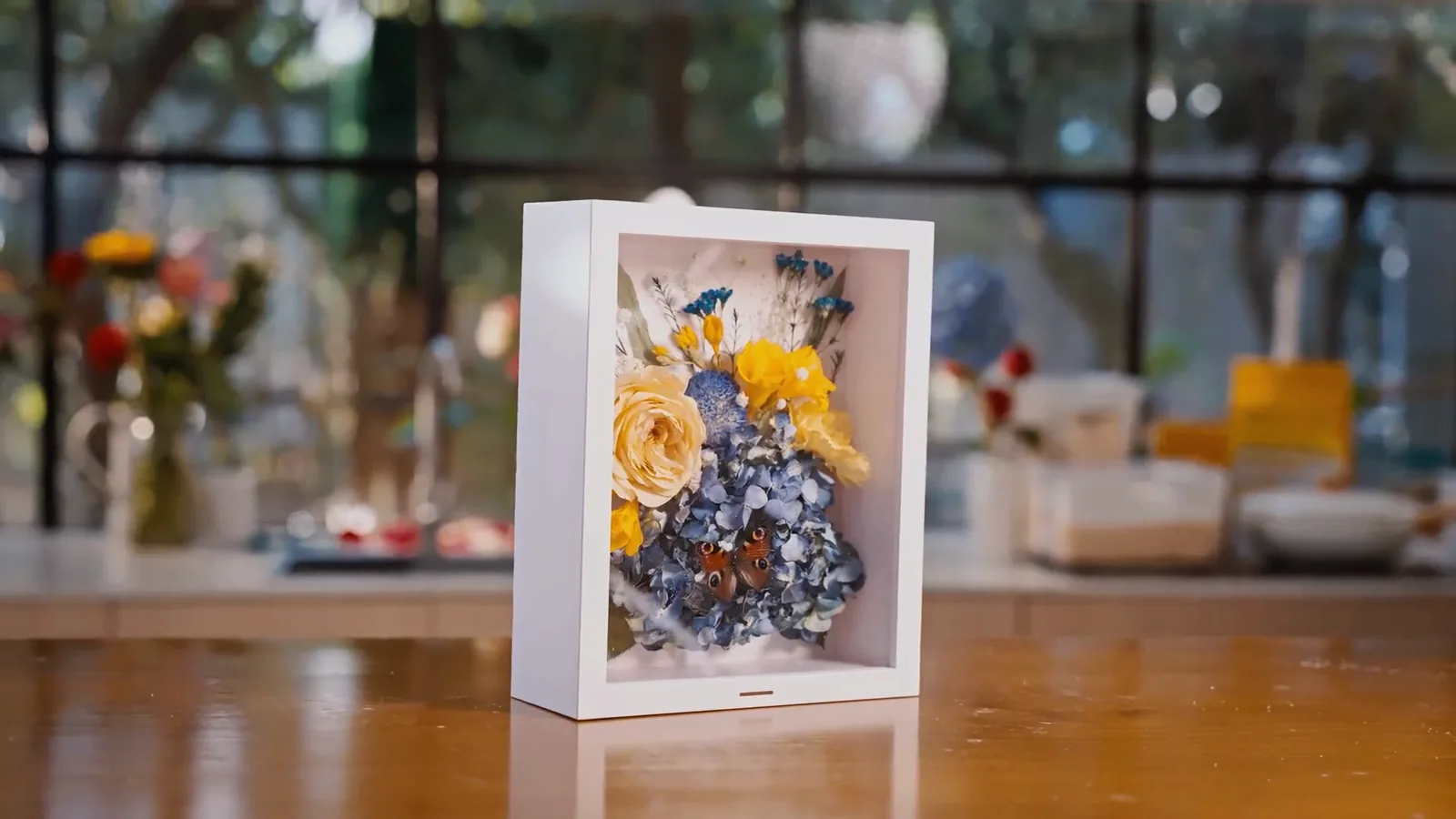
The practical rule: plan on about two inches of usable inner depth for any display of whole dried heads, and pick a footprint to match how much of the arrangement you want to keep. A display like the Wisedry dried-flower shadow box pairs a 10 by 8 inch footprint with 2 inches of usable inner flower depth — one sensible combination for a bouquet keepsake. Pressed flowers are the exception: they are flat by design and need almost no depth at all.
Why depth is the first spec to check
Dried flowers are not flat, and the drying method decides how much space each piece claims. Hanging and silica drying keep the head's three-dimensional shape; the flower shrinks, but a rose stays a rose. That shape is the whole reason you dried them that way, and a shallow box quietly undoes it — in a frame with an inch of depth, fat heads either press against the glass or force the arrangement to be flattened and layered like pressed work.
Depth also matters after the backing goes on. A display is sealed, not packed: each head needs clearance so nothing leans on the glass, and loose filler needs room to sit without being crushed. Underspend on depth and the problems show up during arranging — heads that will not fit, petals kissing the window, a layout that only closes if you leave things out you wanted to keep.
Overspending has smaller costs, but they are real. Extra depth means extra sealed air inside the enclosure, and that air is exactly what the desiccant has to manage. And a half-empty deep box lets loose pieces slide and rattle every time the shelf gets bumped. Matching the depth to the flowers is not fussiness; it is what keeps the arrangement looking the way you set it.
What actually takes up space inside
Working out whether your flowers fit a given box comes down to four things:
- Bloom depth. A silica-dried rose or peony head runs roughly 1.5 to 2 inches deep after drying. This is the number to compare against usable inner depth, not against the box's exterior depth.
- Bloom footprint. Anchor heads claim the most area. Three to five of them usually anchor a 10 by 8 inch layout with room left for filler.
- Filler and greenery. Baby's breath, statice, and dried greens are shallow — most of it tucks into gaps between the anchor heads.
- Backing clearance. The sealing strip around the rim takes a small band of space at the edges. Plan the layout just inside it rather than edge to edge.
Stems barely count: most shadow box arrangements trim stems back to an inch or so, since the heads do the visual work. A full bouquet "frozen mid-throw" — every stem, full length — is a different project and does not fit a standard desktop box at any size.
Size picks by display type
| Display plan | Footprint that fits | Usable depth to look for | What it looks like |
|---|---|---|---|
| One or two statement blooms | 8×8 or smaller | 1.5–2 in | A single rose or peony centered, minimal filler |
| Small posy or boutonnière | 8×10 | ~2 in | Two or three heads plus filler, tight and tidy |
| Full bouquet keepsake | 10×8 or larger | 2 in or more | Anchor heads, filler in the gaps, greenery framing the edges |
| Pressed flowers only | Any flat frame works | No depth needed | Flat botanical collage, glass-to-flower by design |
The first three rows all converge on the same depth requirement, which is why depth is the spec to lock in first. Footprint is then just a question of how much of the arrangement you want to keep.
A worked example: 10×8 inches with 2 inches of depth
The Wisedry box lists at 10 by 8 inches with 2 inches of usable inner flower depth (3 inches exterior). In practice that holds a curated bouquet keepsake: three to five anchor heads set deepest — roses, a peony, the flowers that carry the memory — then filler worked into the gaps at a shallower layer, then greenery setting the edges, all trimmed to sit inside the sealing strip.
What it will not hold is the whole bouquet at full scale. A typical bouquet carries two or three times the blooms that fit a layered 10×8 layout, and choosing what makes the cut is part of the job — the wedding bouquet guide walks through that selection, and the arrangement guide covers the layout itself: anchor with the largest heads first, fill with the airy material, let greenery set the edges.
If your arrangement keeps wanting more room than the footprint offers, the honest options are a larger box or a second display — not cramming. Squeezed layouts close badly, and petals forced against the glass can mark and trap moisture against the bloom, which is one of the routes to the mold problem in why dried flowers go moldy.
Depth, sealed air, and the part people overthink
A common worry at this point: does a deeper box trap more moisture and hurt the flowers? The sealed air inside any enclosure carries some moisture — that is true at every depth — and this is exactly what the desiccant inside is for. The Wisedry box holds 100 grams of indicating silica gel in two hidden compartments, with an orange-to-green window on the front showing when it has absorbed moisture and should be replaced or reactivated following the supplied manual. Depth changes the volume of that air a little; the seal and the silica do the real work. Flowers themselves keep changing slowly over years no matter what box they sit in — no fixed preservation lifespan is promised by anyone honest, and how long dried flowers actually last breaks down what actually moves that timeline.
The checklist before you buy
1. Check usable inner depth, not exterior depth. Two inches of usable depth fits whole dried heads with glass clearance. Exterior depth includes the frame body and tells you nothing about what fits inside. 2. Match the footprint to the display plan. 10×8 for a bouquet keepsake, 8×10 for a posy, smaller for statement blooms, any flat frame for pressed work. 3. Plan the layout before buying. Count your anchor heads, measure the deepest one, and make sure the box takes it with room to spare. 4. Confirm the enclosure is sealed and has desiccant. Size gets the flowers in; the seal and the silica are what keep them well.
Measure the flowers, check the depth spec, and the rest of the decision is taste.
FAQ
Is a 10×8 shadow box big enough for a wedding bouquet?
Yes, for a curated arrangement — the anchor blooms, some filler, and greenery set into layers — rather than the entire bouquet wedged in as-is. The workflow for choosing and arranging what makes the cut is in [the wedding bouquet guide](../dried-flower-shadow-box-preserve-a-wedding-bouquet-in-a-shadow-box/).
How deep does a shadow box need to be for roses?
Silica-dried rose heads keep most of their shape and are roughly 1.5 to 2 inches deep once dry. Plan on at least 2 inches of usable inner depth so the heads sit proud of the backing without pressing against the front glass.
Do pressed flowers need a deep shadow box?
No. Pressed flowers are flat by design and look right in any standard frame. Depth only matters for three-dimensional whole heads — the kind you get from hanging or silica drying, as covered in [the four drying methods compared](../four-ways-to-dry-flowers-compared/).
What happens if the flowers touch the front window?
Pull them back during the layout. Petals resting against the glass can leave marks and hold moisture against the bloom, which is one of the paths toward [dried flowers going moldy](../dried-flower-shadow-box-why-did-my-dried-flowers-go-moldy/). Depth is what buys you that clearance.
Does a bigger shadow box preserve flowers better?
No. What preserves dried flowers is keeping new moisture away from them and managing the air sealed inside — see [how long dried flowers actually last](../dried-flower-shadow-box-how-long-do-dried-flowers-last/). A bigger box only adds empty space and lets loose pieces shift around.