Dust on dried flowers is a slow, quiet process. The display looks fine week to week, and then one morning the bouquet on the shelf looks dull and grayish, and the petals have a gritty feel you can sense from a fingertip. The instinct at that point is to rinse it or wipe it down — and that instinct is the fastest way to lose the arrangement entirely.
Dried flowers clean up well, but only with dry tools and a light touch. Here is what dust is actually doing to the display, which methods work, which ones ruin the flowers, and how a sealed display changes the whole routine.
Why dust is more than a cosmetic problem
Dried petals are brittle and hygroscopic — they hold their dried shape but pull in whatever moisture the air around them offers. That combination is why dust matters more on dried flowers than it does on, say, a ceramic ornament:
- Dust carries moisture. Airborne dust is hygroscopic too; a layer of it resting on petals keeps humidity in contact with the bloom surface instead of letting it pass. Trapped surface moisture is the first step on the path to petals curling, browning at the edges, and eventually dried flowers going moldy.
- Dust dulls color. A gray film over dyed or naturally colored petals reads as fading, but it is a layer sitting *on* the color, not the color disappearing. Brushing it off restores the look. (Actual light-driven fading is a separate process — see how to keep dried flowers from fading.)
- Dust adds weight where petals are weakest. It settles into the crevices between layered petals and under drooping heads, exactly where the structure is thinnest.
One thing dust does *not* do: attract insects. A dusty display is not a bug magnet — the bugs that show up in dried arrangements moved in earlier, as the insect guide explains. Cleaning dust is about appearance and moisture, not pest control.
The dry toolkit
Three tools cover every situation, and all of them are things you already own:
- A soft natural-bristle brush. A clean makeup brush or a wide artist's brush is the workhorse. Support the flower head from behind with a finger and sweep along the petal direction — never against it. The supporting finger matters: it takes the load so the petals do not.
- A hairdryer on its cool setting. Lowest speed, held at arm's length, aimed from above in short passes. The moving air reaches dust that settled between layers, where a brush cannot go without bending stems. Cool only — heat warps petals and makes them crack.
- Compressed air, used reluctantly. For sturdy arrangements that have gone years between cleanings, short bursts from at least 30 cm away will dislodge packed dust. The propellant chill and the pressure both stress brittle stems, so this is a last resort, not a habit.
The order of operations for a dusty open arrangement: brush the reachable surfaces first, then one cool-air pass from above to clear what settled into the layers. Two minutes, done.
What never touches dried flowers
| Never | Why not |
|---|---|
| Water, in any form | Dried petals reabsorb it: curling, browning, color bleed, loosened glue, and mold follow within days |
| Damp or soapy cloths | Same reabsorption, delivered directly where you are pressing hardest |
| A vacuum with a brush attachment | Suction is indiscriminate — it pulls loose petals and seeds off the arrangement along with the dust |
| Sunlight "airing out" on a windowsill | Direct sun bleaches petals fast, and a windowsill is also where dust-free displays go to fade |
| An oven or warm spot "to drive out moisture" | Dried arrangements never need heat; heat warps petals and can damage sealed frames and their contents |
That last row deserves a story. Some cleaning guides suggest putting dried flowers somewhere warm to keep them "fresh." Dried flowers do not want warmth, and if your display is a sealed shadow box, the manual for ours is explicit that the assembled frame should not be heated. If moisture is the concern, the fix is a desiccant, not a heat source.
The methods at a glance
| Situation | Tool | Technique | Risk to watch |
|---|---|---|---|
| Light surface dust | Soft bristle brush | Sweep along the petal direction, finger supporting the head from behind | Pressure snaps brittle petals — let the finger take the load |
| Dust packed into layers | Hairdryer, cool setting | Low speed, arm's length, short passes from above | Heat warps petals; high speed blows loose pieces across the room |
| Sturdy arrangement, years of neglect | Compressed air | Upright can, short bursts, 30 cm or more away | Chill and pressure snap brittle stems |
| Glass and frame exterior | Slightly damp microfiber | Wipe the outside surfaces only, then dry immediately | A drip wicking inside the seal is moisture delivered straight to the flowers |
| Anything wet, ever | Nothing | There is no wet method | Everything above this row exists to avoid it |
How a sealed display changes the routine
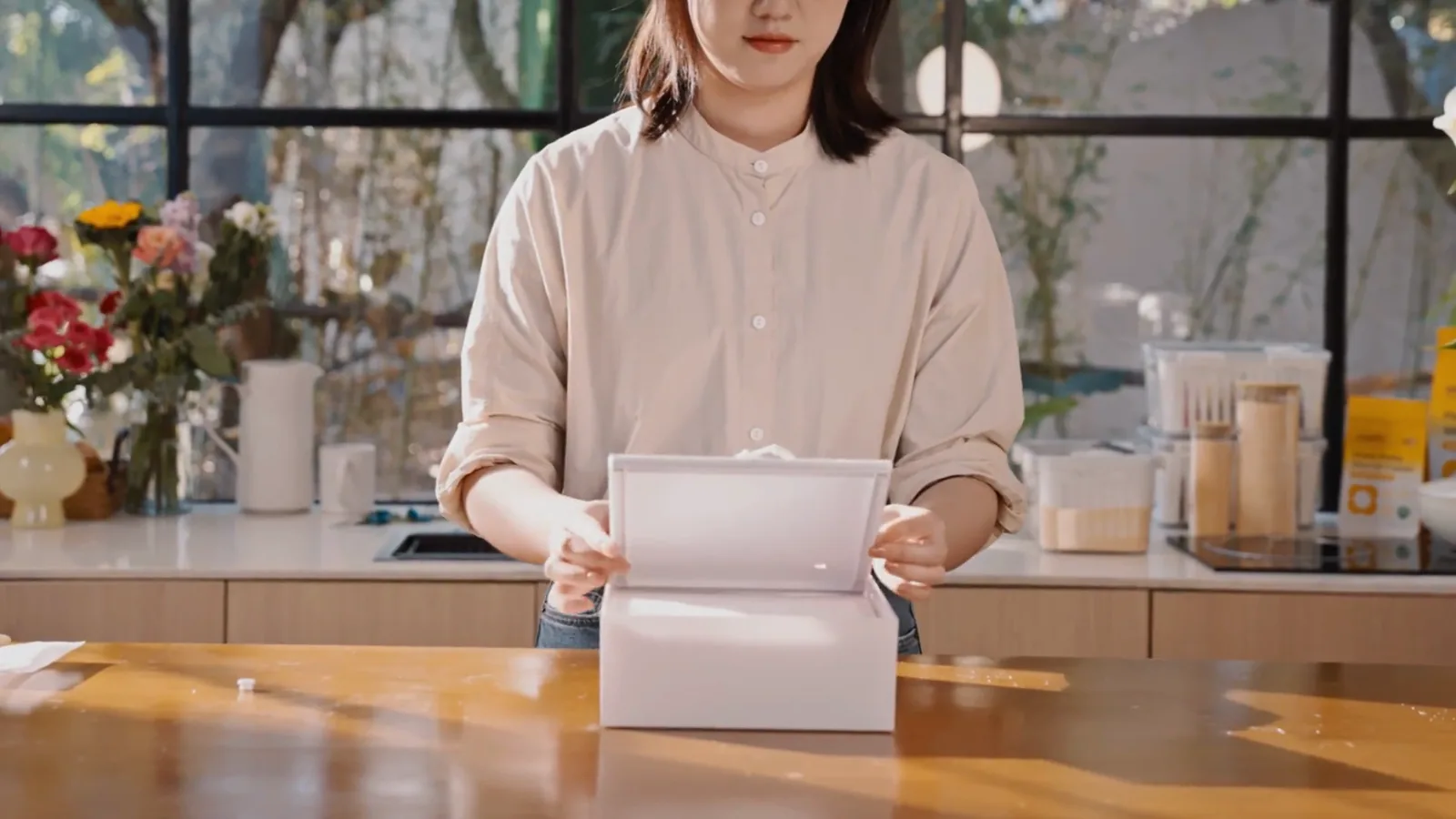
Most of this article exists because open displays sit in the path of room air. A sealed enclosure removes that path. The Wisedry dried-flower shadow box is built around the same principle that keeps moisture out — a one-piece molded ABS body with no joints, and a sealing strip running the full perimeter of the backing — so the air inside stays still and nothing new settles on the flowers while it is closed.
Two habits make a sealed display nearly maintenance-free:
1. Dust before you seal. Whatever dust is inside when you close the backing stays inside with the flowers. Thirty seconds with the soft brush right before closing is the whole job. 2. Wipe the outside, check the window. The glass front takes the room's dust so the flowers never do — a quick wipe keeps the view clear. On our box, the small indicator window shows the silica gel's color: orange means the desiccant inside is still working, green means it has absorbed what it can and should be replaced or reactivated per the manual. That check takes longer to describe than to do.
That is the entire care routine behind glass: one dry brush pass at sealing time, an occasional wipe of the front, and a glance at the indicator now and then. No water ever gets involved because no water ever needs to.
The short version
Dust off an open arrangement weekly with a soft brush, use cool air for the layers, keep every liquid away from the petals, and if you want the cleaning to end entirely, put the arrangement behind a seal. A display like the Wisedry shadow box turns a recurring chore into a one-time dust-and-seal — and the flowers keep looking like the day you dried them, minus the gray film.
FAQ
Can you rinse dried flowers and let them dry again?
No. Dried flowers reabsorb moisture from any wet contact. Petals curl and brown, color bleeds, glued joints loosen, and a damp arrangement is exactly the setup that grows mold. There is no wash-and-dry-again cycle for a dried bloom — the drying step happened once, at the end of the flower's fresh life.
How often should you dust dried flowers?
For an open display, a light brush pass about once a week keeps dust from packing into petal layers. Displays behind glass mostly need the exterior wiped. Anything sitting near a window, a radiator, or a doorway collects dust faster and deserves a closer look every couple of weeks.
Will a hairdryer damage dried flowers?
Only when used wrong. Heat is the damaging part — hot air warps petals and drives out what little flexibility they have left until they crack. On the cool setting, lowest speed, held at arm's length, it moves dust off the arrangement without moving the petals.
Does a shadow box actually keep dust out?
A sealed enclosure blocks the airflow that carries dust, so nothing new settles while it stays closed — it is the same seal that limits moisture. Whatever dust was inside when you closed it up stays inside, though, so give the arrangement a quick dry brush right before sealing it away.
What if the petals are too fragile to touch at all?
Skip the brush and use cool air from a distance, or leave the dust alone. On a brittle bloom, an aggressive cleaning costs more petals than the dust ever takes away — the gentle option is the routine, not the rescue.